PRESENTATION

NEW MANAGEMENT

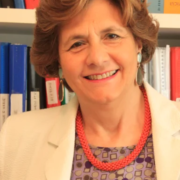
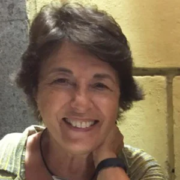
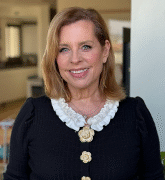
Irma Morosini
Editor in chief

With the celebration of the last Ordinary General Assembly of the AIPCF on February 2nd, one fiscal year has closed, and another has begun. Today, I have the responsibility of leading the AIPCF Journal as its editor-in-chief. I will present my main ideas and introduce the team working to make this journal an instrument of scientific knowledge.

A brief review of history: The journal was born one year after the founding of the AIPPF, in 2007. It was founded by Anna María Nicoló, who guided the initial organization, which was continued in a later stage by Ezequiel Jaroslavsky and David Benhaïm until Daniela Lucarelli took over in the third stage of successions. Thus – up to the present moment – the Journal has had three directors who gave their best to this noble task.

Given the challenge of following in their footsteps, my first gesture is to thank them for the direction and effort of which I have been a witness, having been part of the journal’s Editorial Board since its founding. They remain linked to the journal’s history, and many continue in editorial roles.

The objective is to continue deepening and advancing in the selection of articles written by colleagues who work from the duly founded theoretical basis of psychoanalysis and its application to the clinical field of the family and the couple.

Psychoanalysis, since its creation by Sigmund Freud and his followers, has deepened its knowledge, observations, and theoretical contributions by analyzing clinical situations. Other contributions have added variants to the classic conceptual model, arising in relation to the new complexities presented by historical-social changes, with modifications in culture according to times and places. Psychoanalysis has expanded its approach to treatment and its field of application due to needs and to types of suffering that must be addressed both through listening and through understanding. The recipient has evolved from being a single subject to being a group, and within the forms of groups, to other variants such as: the couple and the family.

For some time now, we have been seeing couples in situations of misunderstanding, reciprocal obstruction, destructive rivalry, with the exposure of painful feelings, carrying histories that arise and are acted out through them. The same happens with many families who come due to the difficulty of living together, due to wanderings in their respective responsibilities, due to significant failures in functions, due to the helplessness of children, hostility, and other situations such as organic illness that do not reverse solely with the administration of medical treatments.

This is our field of work. It is a complex, difficult field that requires attending to and understanding dynamics that have a history, defensive processes, inter-play of parental models, generational processes (trans and intergenerational), which must be understood in their diverse meanings and scopes.

Our work as a Journal of Family and Couple Psychoanalysis is to give expression and dissemination to the reading of relevant writings from diverse theoretical frameworks, illustrated by clinical case studies, which includes the dissemination of useful techniques for working in these specific fields of application. The aim is to review indicators for clinically evaluating the situations that arise and that relate to the framework, the constitution of therapeutic teams, interventions, interpretations, and follow-up in the healing process, which we see more as a capacity to transform.

We work in the journal through the written word, but we intend to go further, meaning that the texts build a useful toolbox for colleagues in their eagerness to learn. This is why we work as a team from the editorial committee, the editorial board, the reading committee, and under the advice of the Scientific Council, so that each issue of the journal that comes out serves as a training instrument for colleagues, as an exchange of ideas, and as a discussion with foundations. For this, the works submitted by authors are selected and distributed according to the sections of the journal, which deals with a previously selected topic of current interest. The thematic articles are accompanied by other sections such as Reading Notes with comments on relevant films and books; interesting works that are outside the issue’s theme, and a dictionary to reinforce terminology concepts. Our journal is international, which means that we receive works from authors of various nationalities and maintain three official languages: English, French, and Spanish. Each work is written in one of these languages but includes a summary and keywords in the other two languages.

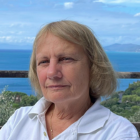
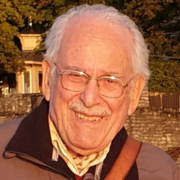
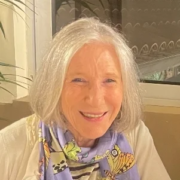
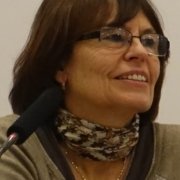
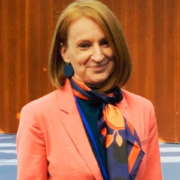
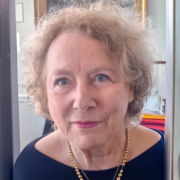
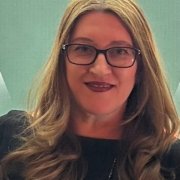
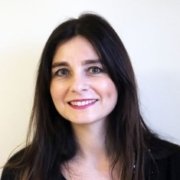
In this new management that I have started, we have organized three coordinations, each corresponding to a language. The coordination for the Spanish language is led by Elizabeth Palacios, the coordination for the French language is led by Christiane Joubert, and the coordination for the English language is led by Ludovica Grassi. All members of the Editorial Board are integrated into one or more of these, depending on their proficiency in each language. The names of all the staff who make up the Journal in its various departments are listed below. New members have joined the Scientific Council, the Editorial Board, and the Reading Committee. We welcome them all.

Elizabeth Palacios

Christiane Joubert

Ludovica Grassi


The association has the quarterly bulletin “Tramas” which transmits news, events, activities of members, other associations, and other specialized journals. We are in permanent contact with this Bulletin.

To conclude this presentation, I would add that a special interest shared by the entire team is for the journal to have greater visibility and reach a larger number of readers through the website, not only of the association (IACFP) but also independently of it. For this, we are working with the webmaster: Carlos Marchese and his team, to achieve it. We are open to comments, suggestions, and anything that allows for constructive dialogue with readers. (revue@aipcf.net)

Thank you very much,

Irma Morosini

OBJETIVES OF THE REVIEW

The International Journal of Couple and Family Psychoanalysis (RIPPF) is an open-access, peer-reviewed publication issued twice a year (July and December).

TOPICS:

It covers topics on the theory, clinical practice, and technique of couple and family psychoanalysis, publishing contributions from authors worldwide. The psychoanalytic frame of reference is vast and encourages dialogue between private practice and institutional settings.

STRUCTURE:

It is composed of: a Scientific Committee – an Editorial Committee comprising its director as editor-in-chief, three coordinators for each of the official languages (Spanish – French – English), the members of the Editorial Committee – the secretariat, and a Reading Committee, who read the received texts in a double-blind manner and write a structured report on each work, advising on its publication.

LANGUAGES:

Each submitted article is edited in one of the three official languages (English, French, and Spanish) and is accompanied by an abstract and keywords in each of the other two languages.

ARTICLES:

Articles include clinical-theoretical works with single case studies or clinical vignettes that allow for the tracking of therapeutic processes based on practice with couples and families. We welcome articles from authors, with particular interest in those that support theoretical innovations enabling the addressing of conflict and psychic suffering in families and couples. It is important to maintain clinical confidentiality.

JOURNAL SECTIONS:

Reflective research articles presenting a qualitative or quantitative analysis with a clinical focus are welcome, as are articles on the unconscious dynamics operating in couples or families; conceptual descriptions (Dictionary section) and book reviews and film analyses (Reading Notes section). Each of these corresponds to a section of the journal.

EDITORIAL GUIDELINES:

The editorial guidelines are published in another section, and we advise authors to have adequate training and supervision.


SCIENTIFIC COMMITTEE

MEMBERS OF THE COMMITTEE

Silvia Amati Sas

Silvia Amati Sas

Italian Psychoanalytic Society – Italy)

Jean – Pierre Caillot

Jean – Pierre Caillot

Société Psychanalytique de Paris – APAOR – France

Alberto Eiguer

Alberto Eiguer

Psychoanalytic Association of Buenos Aires, Université Paris Cité, France

Rosa Jaitin

Rosa Jaitin

Psychoanalytic Association of Buenos Aires, Universidad Paris Descartes – France

René Kaes

René Kaes

Université Lumière Lyon II - France

Anna Nicolò

Anna Nicolò

President of the IACFP

Italian Psychoanalytic Society – Italy

Teresa Olmos de Paz

Teresa Olmos de Paz

Psychoanalytic Association of Madrid – Spain

David Scharff

David Scharff

International Institut of Psychotherapy, University of Georgetown - USA

Jill Scharff

Jill Scharff

International Institut of Psychotherapy, University of Georgetown - USA


EDITORIAL COMMITTEE

MEMBERS OF THE COMMITTEE

Irma Morosini
Irma Morosini

Editor in chief

Argentine Association of Family and Couple Psychoanalysts – University of Buenos Aires and Argentine Catholic University - Argentina

Ludovica Grassi

Ludovica Grassi

English Language Coordinator

Società Psicoanalitica Italiana – Italy

Christiane Joubert

Christiane Joubert

French Language Coordinator

Société Française de Thérapie Familiale Psychanalytique, Université Toulouse Jean Jaurès – France

Elizabeth Palacios

Elizabeth Palacios

Spanish Language Coordinator

Psychoanalytic Association of Madrid – Spain

Elisabeth Bayart – Darchis

Elisabeth Bayart – Darchis

President of SIPFP (Family and Perinatality) and AENAMT (Abraham et Torok -Member STFPIF, SFTFP, SFPPG, AIPCF, AFCCC, WAIHM, MARCE – France

Cristina Calarasanu

Cristina Calarasanu

Scientific Secretary of the IACFP

Romanian Association of Group and Family Link Psychoanalysis “Enrique Pichón Riviere”; European Federation of Psychoanalytic Psychotherapy, Romania

Raffaele Fischetti

Raffaele Fischetti

Research Group in Operative Psychoanalysis – Italy

Ezequiel Jaroslavsky

Ezequiel Jaroslavsky

Argentine Psychoanalytic Association – Argentina

Anne Loncan

Anne Loncan

French Society of Psychoanalytic Family Therapy – France

Daniela Lucarelli

Daniela Lucarelli

Italian Psychoanalytic Society, Italy

Hanni Mann Shalvi

Hanni Mann Shalvi

Israeli Psychoanalytic Society – Israel

Perrine Moran

Perrine Moran

Tavistock Relationships – United Kingdom – France

Pascal Nguyên

Pascal Nguyên

Société Française de Thérapie Familiale Psychanalytique, Université Paris Cité – France

Simona Popa

Simona Popa

Didier Anzieu Bucharest Psychotherapy and Personal Development Center – Romanian Association of Group and Family Link Psychoanalysis Enrique Pichon Riviere

Margherita Rossi

Margherita Rossi

Italian Society of Couple and Family Psychoanalysis – Italy

Almudena Sanahuja

Almudena Sanahuja

Société Française de Thérapie Familiale Psychanalytique, Université de Franche-Comté – France

Ángelo Silvestri

Ángelo Silvestri

Confederation of Italian Organizations for Analytical Research on Groups, Italy

Alejandro Tamez

Alejandro Tamez

Society of Psychiatry and Psychotherapy of Monterrey, A. C

Agnès Rotschi

Agnès Rotschi

Review Secretary

Editions Erès, France

Felisa Perry

Felisa Perry

Language Translator at meetings

Israel


READING COMMITTEE

MEMBERS OF THE COMMTTEE

  • Pierre Benghozi (European Federation of Psychoanalytic Psychotherapy, Université Paris Cité – France)
  • Christophe Bittolo (Société Psychanalytique de Paris, Université Paris Nanterre – France)
  • Emanuelle Bonneville-Baruchel (Université Lumière Lyon II – France)
  • Liliana Bracchi (Argentine Association of Group Psychology and Psychotherapy, University of Business and Social Sciences – Argentina)
  • Susana Casaurang (Argentine Association of Group Psychology and Psychotherapy, David Maldavsky GPDM Group and “Family Listening” Group – Argentina)
  • Graciela Consoli (Argentine Psychoanalytic Association – Argentina)
  • Paloma De Pablos Rodriguez (Spanish Association of Research in Psychotherapy and Social Psychology – Spain)
  • Clelia de Vita (Italian Psychoanalytic Society, Italy)
  • Juan Gonzales Rojas (Spanish Association of Research in Psychotherapy and Social Psychology – Spain)
  • Ludovica Grassi (Società Psicoanalitica Italiana – Italy)
  • Svetlana Hiers (Université Paris Cité,”Société Française de Psychothérapie Psychanalytique de Groupe- SFPPG, France)
  • Timothy Keogh (University of Sidney – Australia)
  • Alejandro Klein (Universidad de Guanajuato, Campus Leon – Mexico)
  • Michèle Lamothe (Société Française de Thérapie Familiale Psychanalytique – France)
  • Rosapia Lauro Grotto (Società Psicoanalitica Italiana, Università di Firenze – Italy)
  • David Leo Levisky (Sociedad Brasileña de Psicoanálisis de San Pablo – Brazil)
  • Manuel Liss (Grupo David Maldavsky GPDM y Grupo ” Escucha de lo Familiar ” – Argentina)
  • Mercedes Lugones (Società Italiana di Psicoterapia Psicoanalitica dell’Infanzia, dell’Adolescenza e della Coppia – Italy, Argentina)
  • Damian McCann (Tavistock Relationships – United Kingdom)
  • Lila Mitsopoulou (Société Française de Psychothérapie Psychanalytique de Groupe, Université Lumière Lyon II – France)
  • Mary Morgan (Tavistock Relationships– United Kingdom)
  • Marie Naimi (Université Frenche – Comté – France)
  • Diana Norsa (Società Psicoanalitica Italiana – Italy)
  • Elizabeth Palacios (Asociación Psicoanalítica de Madrid – Spain)
  • Aggeliki Passia (Hellenic Organization of Psychotherapy and Education in Group Analysis – HOPE in GA, Greece)
  • Carles Perez Testor (Universitat Ramon Llull – Spain)
  • Maria Manuela Porto (POIESIS Associação Portuguesa de Psicoterapia Psicanalítica de Casal e Família – Portugal)
  • Giuseppe Saraò (Società Psicoanalitica Italiana – Italy)
  • Massimiliano Sommantico (Universitá degli studi di Nápoli – Federico II – Italy)
  • Lea Setton (Asociación Panameña de Psicoanálisis – Panama)
  • Simona Taccani (Centro di Ricerca di Psicoterapia – Italy)
  • Isabel Valla (Asociación Psicoanalítica de Pareja, Familia y Grupo – Argentina)
  • Christopher Vincent (Tavistock Relationships – United Kingdom)
  • Regine Waintrater (université Paris Cité ; PSYFA ; Société Française de Psychothérapie Psychanalytique de Groupe- SFPPG ; France)
  • Catriona Wrottesley (Tavistock Relationships – United Kingdom)
  • Giulio Cesare Zavattini (Società Psicoanalitica Italiana, Università di Roma La Sapienza – Italy)
  • MC Zurlo (Università degli Studi di Napoli Federico II, Napoli, Italy)

International Review for  Couple and Family Psychoanalysis

IACFP

ISSN 2105-1038