
REVISTA N° 02 | AÑO 2007 / 2
ARTÍCULO
Transforming the relation: interpretation in the psychoanalytical psychotherapy of couples
Anna Maria Nicolò*
Despite the limitations and advantages common to all kinds of psychotherapy, such as a lower frequency of sessions and a specific focus, the central elements of the treatment of couples are still the transference/counter-transference dimension and the work of interpretation, which obviously include features adopted specifically for this type of setting.
An analyst will be especially challenged, both at the level of evaluation and of the choice of intervention techniques, to focus her/his attention and work on the link and on the relationship rather than on individual contents. There is no larger source of confusion than the assumption that a psychotherapeutic intervention on a couple consists in putting the partners together and providing them with two individual psychotherapies while they sit one in front of the other or that the analyst acts as a mediator of their conflicts.
The hard road that leads a couple to request treatment is in itself an opportunity for change, even if the couple’s implicit expectation is that the analyst is a judge that decides who is right and who is wrong.
Both when a couple explicitly expects to arrive at a separation and when it tries to solve existing conflicts, the project of couple therapy allows us to focus attention on the couple as a structure with a specific identity and to begin to create a boundary between it and the families of origin, its children and the rest of the world and, through this, lead the partners to discuss the reasons behind their marriage and partnership. Each partner needs to start a complex work process aimed at highlighting to what extent the current problems are related to each individual in terms of independent personal conflicts, and how much is related to the relationship with the partner, seen as the cause, reinforcement or victim of the conflict.
Similar work must be done by the analyst in the diagnostic sessions in order to identify indications for the most suitable setting for the specific situation, such as individual psychotherapy or couple psychoanalysis or psychotherapy, to mention just a few of the many choices available.
The work1 required for making these choices is complex and transformational in itself, as the analyst or the analytical couple represent the actual and fantasized third person to which the partners will relate: the other, the not-me, both for the couple as a unit and for each partner.
One of the first questions that each partner asks her/himself in the session, often explicitly, is “How will I communicate this aspect of myself to the other? How will this change the tone of our marriage and my relationship with my partner?”
The question is complex because, in so doing, from the very beginning we face the issue of the relation between the individual and the couple, between parts of the self that are in the relationship and maintain, what Anzieu (1986) calls the twin illusion, and other aspects that at times are experienced as persecutory, and other times as enrichment.
The setting is therefore an invitation and an opportunity for transformation, also because one’s partner can be experienced as a therapeutic figure, if one overcomes the difficulty of talking in front of a third person.
Some notes on diagnosis
While paying attention to the link between the partners and to the therapeutic relation that the couple and each partner establish, the analyst must also discover the bi-directionality of this relation, the function played by each partner for the other in the couple, in the family and in a story that could be repeated. We will go on to highlight the areas of intersection and meeting of these relations.
In order to explore these aspects and delve deeper into the process, in my clinical experience I find it useful to ask some questions and to decode some tangles in order to clarify the beginning of couple life.
The most important questions are the following:
- what are the unconscious reasons in the choice of a partner? To answer this it might be useful to understand how the actual first meetings took place and what were the phantasies underlying the choice of the other;
- how was the couple membrane formed and how does it work? The identification of this aspect allows us to elucidate the boundary between the couple and the families of origin, the couple and any children it has produced and the couple and its social environment. From the point of view of the parental pathology, it will be important to see if a child is used to define the membrane. The membrane’s elasticity and permeability are crucial indicators. For example, one of the most legendary examples in literature is that of Romeo and Juliet, showing an adolescent couple that forms in protest against their families of origin. This protest was mainly directed at achieving the individuation separation of the partners from their families of origin and from their infantile world. The very protest thus created the couple’s membrane, through which they marked the boundary with their families and peer group. Outside the membrane the couple could not exist, as their tragic death shows;
- what is the quality of the couple’s intermediate space? Does this space have a transformational function, do concrete or acted aspects prevail, what is included and what is excluded or split off or dissociated and projected outside. The latter point seems to me extremely important for the viability and transformability of a marriage.
Some couples split off the aggressive dimension and locate it outside their space, and along with it also the libidinal dimension. The couple ends up playing only an anaclitic support function for each partner: the tone will be seemingly serene, but in actual fact is quite artificial and non spontaneous. The true parts of each partner that could convey conflicts are kept out at the cost of the loss of libidinal aspects that could represent the pleasure of being together (and also sexual pleasure).
If it is useful to answer the above questions at the level of specific contents, we should not forget the overall picture in front of the analyst decoding the session. There are different transference and interactive levels of reality that intertwine and influence each other.
To provide a scheme of the possible levels present in couple sessions, we could say that along the transference/counter-transference axis, the following are relevant:
- the interactive level, represented by verbal and non verbal behaviour that characterize the visible interactions between the partners and with the therapeutic couple. This is an especially important level in this kind of setting because the non verbal is one of the communication modes used inside a couple and because what characterizes a couple is the use of the body, or better a couple is based on the body;
- the more primitive levels that organizations such as couples and families activate. These levels are more undifferentiated and at times the distinction between soma-psyche, or between egoother can be cancelled;
- the individual dimensions that, beyond any complementarity, exist as relevant aspect of functioning. These parts do not partake of the collusion and each partner feels they are separate or personal or secret and represent a guarantee for individual growth and couple development;
- the nature of the collusion the partners have built together that transforms them in its being a new element;the nature of the mutual and complementary projective identifications between partners.It can be useful at this point to decode the pattern configurations that the couple enacts in the here and now of the session.
Summarizing, then, the analysis of interactions shall take into account the experiences, fantasies and dreams, that are expression of the internal world, of conflicts, emotions, anxieties and defences that characterize family and couple life. Couples and families act as multidimensional organisms in the session where an intertwining of emotional, bodily, affective, representative, phantasy, ideological and mythical aspects is variously activated. The intergenerational and the transgenerational elements intertwine from the very beginning and continue to exist in the group unconsciously or consciously, in a repressed, split off or foreclosed way. These levels will be expressed in interactions and actions as they are foreclosed, dissociated or split off.
A family psychoanalyst is not only interested in individual projections, but also in the response of the other onto whom the projection is directed and in the changes caused by these responses. As Bion writes, we must look not only at projective identification, but also at what this projective identification DOES to the other. We should therefore observe the effect of this defence mechanism on the reality of the other, i.e. how a fantasy expressed through projective identification can become part of the other’s reality and change him/her (Bion, 1962).
The projection and its effect on the other, the use of the object, how the other is parasitized, exploited, colonized, or on the contrary used inside oneself or in the relation, in the individual or collective economy are the focuses of observation and intervention that will have to integrate observation of an individual, observation of the group in the session and observation of intergenerational stories.
The link as a third co-constructed element
Those of us who work with couples and families are well aware that these settings challenge our theoretical and technical certainties and force on us a metalevel of understanding. The evaluations useful at individual level are no longer enough. We could try to explain their functioning by observing the mutual projective identifications of each partner onto the other, the mutual junction of these projections, the unconscious contract that corresponds to each partner’s needs. This kind of theory characterized the work of Dicks, one of the pioneers of couple psychoanalysis, and of his successors up until today. It is based on the theory of object relations, but we could wonder if the theory of object relations is enough to explain the phenomena taking place in the clinical setting, in falling in love, in couples and families or in pathologies such as psychosis or folie-à-deux.
Unfortunately we do not yet have a theory that explains all these phenomena, even if suggestions on this issue are quite frequent in many authors, starting from Freud himself, who thought that the unconscious of one person can react to the unconscious of another eluding the conscious. This fact, Freud writes, is unobjectionable from a descriptive point of view, although it requires deeper investigation (Freud S, 1915).
In the light of these considerations and questions, other authors consider that the terms projection, externalization, projective identification, putting parts of one’s self in the analyst, are not enough to explain and understand the process that characterizes the establishment and life of a family and of a marital couple and also of an analytical couple (Sandler quoted by Merini, 1992).
Based on Harold Searles’ work on therapeutic symbiosis (1979), Ogden describes the co-creation by analyst and patient of a “third” subjectivity that belongs to neither of them individually but requires each of them to emerge in their roles. He therefore does not suggest parallel worlds resonating between interacting partners, but rather the generation of a combined subjectivity, built in an unrepeatable way.
Many authors, even if they do not refer it to a marital couple, but to the analytical couple, discuss the creation of a third object that is new and activated in the relation between persons.
From this purview, the concept of link as a third element, built in the meeting of two or more persons, is a useful tool for understanding and working. I will dwell on this in particular because, in my opinion, it is important for understanding the dynamics created in this kind of setting.
Pichon-Rivière highlights the difference between a link and an object relation. In his book, Teoria del vincolo (1980) he asks: “Why do we use the term link? We are accustomed to using the concept of object relation in analytical theory, but the concept of link is more concrete. Object relations are a structure internal to the link… We could say that we inherited the concept of object relation from atomist psychology, whereas the link is something different and includes behaviour. We can define the link as a peculiar kind of relation to an object; from this relation derives a more or less fixed conduct with the object, which forms a pattern, a model of behaviour that tends to be repeated automatically both in the internal and in the external relation with the object”.
Eiguer, Berenstein and Puget also discuss this idea.
Berenstein, for example, reminds us that the acknowledgement of the presence of the other, irreducibly alien to the self, with whom we hold a phantasmatic and an actual relation, can be extremely creative. As it is not possible to assume it as belonging to ourselves, nor to reject or expel it, at the cost of breaking the link, if it does not change into something absent or vanishes like an alien, it requires us to change as subjects. All these considerations lead to the consequence that the other’s person, for the aspect perceived as external to the self and separated from the field of our projections, provides us with a field of radically different experience from the other, seen as objective. (Berenstein2)
To go back to the start, we can say that there is a great difference between the concept of object relation and that of link, and I think that the concept of link can help us to explain the phenomena taking place between a person and her partner in significant couples and families. We can conclude that the theory of object relations covers the relation of a subject with its object and does not address the relation between a subject and an object that is an interpersonal relation (Kohon, 1989).
The object of a relation is not only the object of projection but also the end of a process of psychic exchange and therefore it is in its quality of “other” subject, another subject that insists and resists as other (Kaës, 1994).
I think that we need to postulate the existence of more levels present at the same time in interpersonal dynamics. They must be integrated to allow a better understanding. There will then be an interpersonal and an intrapsychic functioning and a level represented by the different object relations existing between that subject and the persons that are subjected to his projections, and another that we can call link, taking place between one or more subjects, typical of the relation between a subject and another subject different from oneself.
Pattern configurations in the setting
If we succeed in overcoming the focalization on individual contents to which our theories led us until now, we can observe in the here and now the deployment of actual pattern configurations that characterize couple functioning and show the quality of the link between the partners. They represent actual circular relations in motion in the session.
These configurations are part conscious and part unconscious, but are always created by the partners influencing each other. They refer to the mutual way of perceiving oneself and behaving that each partner uses with the other and somehow show part of the couple’s identity. They thus show the versions of the self that are activated as a complement to the partner’s activation and allow us to see what are the links that bind and entangle the partners.
In order to better understand this, I must mention the fact that systems theory showed the sequence of circular interactions between the members of a relationship. It is instead more difficult to imagine that also at a phantasy level we carry relational modes that are enacted in the here and now in relation to the other, that in turn changes in relation to ourselves with a similar process.
This reminds us of Freud’s statement (1887-1904) in a letter to Fliess concerning bisexuality: I am getting used to the idea of considering sexual intercourse as a process in which four persons are engaged. Four persons – or many more or different relations – we could add today, with reference to existing relational modes.
Kernberg, for example, states that there are always six persons in bed: the couple, its two members, their unconscious Oedipal rivals and their unconscious Oedipal ideals.
In his book “Love relations”, Kernberg (1995) mentions unconscious scenarios in the couple, but considers them pathological. They gradually grow based on the cumulative effects of dissociated behaviours. The enactment of these scenarios becomes destructive because it triggers circular relations that invade the couple’s love life well beyond its interactions and its ability to contain them. Our daily experience shows these aspects clearly when we observe the manifest change in persons well known to us when they interact in different contexts with persons with whom they have deep and long lasting relations. We can, for example, observe a colleague that we see almost everyday at work who at home with his wife enacts aspects unknown to us as a response to her interaction patterns.
In my opinion, the couple comes to us deploying these configurations that show their mutual connection in the circular interaction in the here and now and re-enacts these configurations for the third, the analyst or the analytical couple.
The possibility to confront the other in the presence of a third is in itself transformational, especially if one can vouchsafe the neutrality of the analyst occupying an equally empathic position towards each partner. The analyst’s neutrality deriving from her/his ability to identify equally in both partners (trying in this to consider also their split off and repressed aspects) is a preliminary guarantee to avoid early interruption. The setting with four persons (a couple of psychotherapists and a couple of patients) should facilitate this position, even if strains come from the patients, at times becoming actual attacks to the link of the therapeutic couple. Conflicts that have not been worked-through in the therapeutic couple can cause a dangerous loss of neutrality.
Even before interpretations are made, a confrontation between the partners mediated by the analyst can be useful. Just as the interventions for a mutual clarification in front of the analyst, or introduced by the analyst, are an indispensable complement of this work.
The very couple setting, as I said before, delimitates and potentially reconstructs the couple’s space and membrane. It can then have the function of reinforcing couple identity. In this perspective, interpretations can reinforce their link and help the partners to identify the characteristics of this common product that they have built. At times the partners unconsciously ask for a delimitation of the couple and for a strengthening of the link guaranteeing union, as can be easily seen in some young couples where the delimitation and separation from the families of origin is still uncertain.
There are however also “dividing” interpretations, i.e. interventions that enhance the difference between the partners, their conscious and unconscious expectations, their mutual needs at the cost of collusion or integration.
Davide and Silvia are in their thirties, recently married, after having been engaged for 6 years. Silvia’s pregnancy with their first child precipitates the wedding and also the need for Davide to work, alternating family needs with hard work for completing his studies.
This unexpected marriage has been ill accepted by Davide’s mother who has a strong link with her son and reacts to her daughter-in-law’s pregnancy by trying to keep her at a distance with a contemptuous and insulting attitude. Davide however confirms his decision to get married, although he devaluates the ceremony, which takes place without informing friends, colleagues and relatives, without a honeymoon or a party.
The child’s birth makes the situation even harder because Silvia takes care of the baby in a compensating way, while Davide spends his free time studying at his parents’ house and starts love affairs that provoke his wife’s jealousy and give rise to frequent violent fights with aggressive acting outs.
During childhood and adolescence Silvia had been loved and cuddled by her parents and brothers, as the youngest and only girl and now she is disappointed. At the beginning she felt safe in her relationship with Davide, who had considered her for years “the most beautiful thing he could ever have”, but now she is afraid and is supported by her family of origin and does not know if she can rescue her marriage and above all, what marriage.
The diagnostic sessions highlight a situation where Silvia is the victim and tries to build an alliance with me, while Davide feels guilty and ashamed or rebellious and protesting.
Comment
The question arising in the very first session is whether individual treatment would be better suited for Davide also for his difficulty in separating from his mother and his identification conflicts with his father, whose figure is an ideal to be reached, even if his father is seen at times as selfish and erratic.
The risk entailed by the choice of an individual setting would have been to facilitate or even irreversibly determine a separation in a young couple that had been shattered by the first obstacle encountered without a proper working-through.
Their decision to try couple treatment, instead, was an effort at acknowledging this new married and adult couple identity. The therapeutic setting allowed to implicitly define and delimit the membrane vis-à-vis their families of origin.
The interpretation of the meaning of their being in the session and the prospective and constructive value of their engagement allowed to increase couple cohesion and to evaluate the couple’s good and creative aspects.
This work had to proceed focusing on the impact that the reality of being a married couple with a child had had on both partners, exposing their being in love as a mutual and shared illusion.
The interpretation of the fears, conflicts and fragility of each partner allowed each partner to elaborate these aspects and provided a more realistic vision and therefore the possibility of accepting the other. It could have been very useful to highlight Davide’s claustrophobic fears in the relation, his anxiety for having to relinquish the world of adolescence and enter the world of adults by means of a not yet elaborated double mourning for adolescence and for his real father, who had recently died, and for the separation from his mother.
His anger was poured into the couple space and onto his wife, who in turn felt deprived of her role of “golden child”, always loved, but possibly incapable of loving, that she had played in her family. The interpretation of this anger was aimed at showing how Silvia became paralyzed and passive by these feelings.
The couple was undergoing a delicate phase, characterized by the difficult coincidence of pregnancy and the beginning of married life, and successively, fear of the presence of a baby.
The different way of seeing these aspects that emerged after the first sessions could have allowed them to negotiate a more realistic collusion without feeling that their personal and different aspects were forcing them to choose separation as a mature act and not as a violence against the other, or as a regressive choice taking them back to interminable adolescence. This work was also useful from another perspective, because it could prepare them for individual therapy if it became necessary.
Levels of interpretation in the couple
The fourfold structure, a couple of therapists and a couple of patients, makes the intersecting of relations and the exchanges that come about more complex in the session
Firstly, a therapeutic couple can be seen as a phantasy parental couple or it could function as an identification model. It can also be experienced by the patients as a rival couple, or as having an alter-ego value.
It should also be noted that a fourfold setting, in the case of serious pathologies or in the case of counter-transference working-through difficulties, can activate primitive group dynamics such as those seen in groups with basic assumptions. One must keep the latter aspect in mind without forgetting that the couple is not a group, obviously, as its members shared a story well before they entered the therapeutic process. A couple is also a legal, social and economic institution and shares space and time before and after the setting. But most importantly, a married couple is based on the use of the body, i.e. it has a matrix whose roots are found at a biological and transgenerational level.
Given these premises, aware of the limitations related to a theoretical analysis, the analyst will keep account of different intervention possibilities3.
- the analyst can intervene on the relation of the patients’ couple
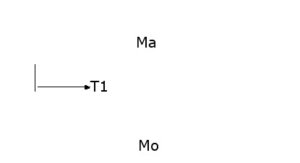
- another area concerns the relation between the patients’ couple and the therapists’ couple
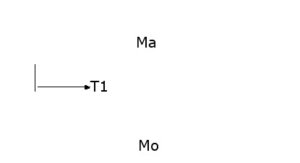
- another area concerns the relation that the couple or either partner have with a therapist.
couple
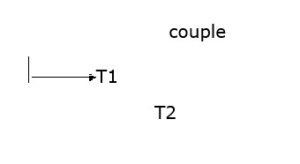
Interpretation can be located on three levels:
- a horizontal level, i.e. mutual and complemental projective identifications and corresponding splittings. At this level the analyst tries to identify and interpret the pattern configurations that characterize the couple, the personal components of each partner and the ensuing circular feedback;
- a vertical level, that tries to link the current functioning of the couple with the conflicts and dynamics of each partner in their past history and in their family of origin. In particular this concerns the parental link that each partner experienced in their family of origin;
- a diagonal level, i.e. how these relations are re-enacted in the here and now and therefore in transference-counter-transference dynamics.
Highlighting the couple’s collusive aspects and the different personal shares allows each partner to feel acknowledged in his/her idiosyncratic aspects and to observe the relation existing between being together and being separated.
I will now present a clinical vignette4 of a couple in the eighth month of weekly therapy with two analysts.
The couple came for treatment, as they said, due to their inability to separate or stay together in a satisfying way.
They had both interrupted individual psychoanalysis and the husband took the initiative of seeking couple treatment.
In their mid-thirties, they have two daughters, born at a one year interval, now in latency age. After they met, Gina moved to live with Federico in his parents’ home.
In the sessions Gina tells a story of deprivation. First born of five children, with a psychically disturbed mother, she was sent to boarding school as a child and then moved to live with a distant relative.
Federico is the son of a well to do family with apparently non intrusive, but also uninterested parents. He has an older sister.
After the birth of her daughters, Gina looks after them full time and Federico has an affair that he mentions to his wife. After a few years Gina too finds a lover.
The tone of the sessions is unusual from the very beginning. The partners seem to enact a play portraying the story of their marriage and they mutually bounce back memories and reflections leaving us aside with the role of audience of this scene. During our work we feel they highlight the unconscious motives underlying their choice of partner, as can be seen in a dream Gina brings at the beginning of treatment. “I went to see a flat where I would have liked to live, as suggested by cousins of Federico that I had not met. The flat belonged to his parents. I saw it alone and it was wide and full of light but had many parts that needed repair.”
Thanks to the associations with their early meetings and with the analytical room, we see that using her partner Gina had managed to take possession of and reach environment-parents (the flat in the dream) that she had not had before, and, like now in the transference, thanks to her husband’s initiative, she has been accepted in analysis.
A few sessions later Federico reports a dream. “As my wife urged me, I took the wheel of a car so far driven by an unknown man. I did it to reassure her, even if the driver was capable. The scene changes and I am looking out of a window at two Martian children who mutilate objects or make them disappear by gazing at them.”
The associations show that he had always felt reassured and proud of his wife’s trust and admiration.
Gina says that on the contrary now she is less worried when other people drive, because her husband sometimes drives dangerously.
In this small fragment, I think we can see the support function and the confirmation of identity that she performed for her husband, but this started to founder when the daughters were born.
Another aspect is that each of the two dreams concerns the existence of something unknown in the transference, in each partner and in the couple.
(In the dream Gina finds the flat because strangers tell her, while Federico takes the wheel of a car driven by a stranger).
So we can highlight a collusive dimension in the dream of each partner represented by these unknown aspects. It seems that the other was not chosen and used only to change or repair aspects in oneself, but also to maintain parts of the self that each partner and the couple unconsciously wanted to keep unknown.
1st session after the Christmas break
They ask each other how to start. Gina suggests to Federico that they talk about infidelity.
In order to understand what they mean by this, Federico mentions the Christmas vacations in the home of some friends in the countryside. He was cooking with the lady friend and had an argument with her on the quantity of pasta they should cook. He did not want to cook too much of it. Gina was called as an arbiter, exchanged a look of complicity with her friend, which made him feel despised, and said that he always cooked less than the necessary amount.
Infidelity, he says, is the despising look she gave me, because there is no solidarity in our couple.
Gina acknowledges that only recently she realized that this kind of infidelity is important for him. For example years ago, she would tell her mother-in-law how Federico successful had been at work, but he felt hurt because he would have preferred her to keep that a secret.
Federico explains this by saying that he felt his mother was too curious and always ready to ask questions to Gina.
Gina snaps and says that she always felt his parents, especially his mother, were selfish “as if they had never noticed him”.
While they talk on their own about this, my colleague starts to speak, but they interrupt him.
I am hurt and surprised about this interaction because I feel that they are not only attacking him but also the elaborative function of the analytical couple.
My colleague then interprets this as if perhaps both of them, in becoming a couple, were trying to separate and keep a distance from their families of origin.
Federico disagrees, but Gina says he doesn’t want her to take their daughters to their grandmother, who is always asking her to and they start talking about this.
I comment that in this session they are enacting an interaction that excludes us. Maybe they both experienced rage and humiliation for having felt left out by their parents’ relationship or their relations with other members of the family. Maybe they felt curiosity in addition to rage and envy about their parents who excluded them. Maybe in establishing an extramarital affair they were repeating the effort of attracting the other’s attention and at the same time rejecting him/her, as they felt their parents had done and they were trying to do the same with us.
They seem surprised and thoughtful.
The session comes to an end and Federico says it is true that his parents did quite a few things, like long journeys, without him. They also always spared him unpleasant news leaving him in a sort of limbo.
Comment
The last therapeutic session, summarized here but actually part of a long dialogue, exemplifies some aspects of interpretation with couples. The object of our effort was, in fact, aimed at interpreting the collusive aspects linking them vertically to their family histories and showing the re-enactment of the transference.
This interpretation could also be an example of work with a couple of patients and their relation with one of the analysts, as observed and commented by the other analyst.
There is no need to dwell on the fact that the working-through of the counter transference and a continuous work of confrontation in the therapeutic couple are the essential backdrop of these interpretations.
In its simplicity this vignette is useful for showing the re-enactment and dramatization in the session of relational tones and modes that the couple experienced in its earlier history and the various functioning levels that must be taken into account.
There are various aspects that can be commented in this vignette. The first one is Gina’s need to be accepted by an environment mother that she obtains through her husband. This is countered by Federico’s need to be seen and recognized by a wife/mother that is not interested and is an accomplice of strangers. We could also add his fear of being seen by parents/analysts that, like the Martian children, can cruelly expose his childish and pseudo-adult aspects. Another dimension is related to Oedipal issues concerning the rage and sense of exclusion felt by the couple. Another concerns identity and the roles played by each partner for the other that are re-enacted in the session. I refer for example to their discussion of infidelity: Federico was cooking for everyone and seemed to play that motherly role that Gina had lacked in her life and had requested at the beginning of their relationship. We could also reach the following conclusion: on the one hand, instead of assuming the role of man and father, by cooperating with the maternal function (cooking) Federico tries to take possession of it. On the other, Gina, too, seems to rob her partner of his home and parents, excluding him and, with the complicity of another woman, attacks the genital level of solidarity of a married couple and the paternal function.
The scant mention of their actual fathers in their associations, their effort to exclude the male analyst from the session, Federico’s exclusion experienced in his wife’s relation to her daughters or those he called infidelities, seem further confirmation of this hypothesis. This couple appears to be engaged in a negative Oedipus and probably we should link to these issues the unknown and unresolved parts that characterized an aspect of the collusion of the couple relation.
Bibliografia
ANZIEU D. (1986). Introduction à l’étude des fonctions du moi-peau dans le couple, Gruppo, 2 pp. 75-81
Berenstein I. (2001). The link and the other, Int. J. Psychoanalysis (2001) 82, 141
EIGUER A. (1987). La parenté fantasmatique, Paris, Dunod.
Kaës R. (1976). L’appareil psychique groupal. Constructions du groupe, Dunod, Paris.
Kaës R. (2007). Les alliances inconscientes, Dunod, Paris
Kohon, cit. in Hinshelwood R.D. (1989), Dizionario di psicoanalisi kleiniana, Cortina, Milano, 1990.
Laing R.D. (1955). The divided self, Tavistock London.
Laing R.D. Self and the others, Tavistock, London.
Nicolò A.M. (1996) Essere in coppia: funzione mentale e costruzione relazionale. In : Curare la relazione: saggi sulla psicoanalisi e la coppia. FrancoAngeli, Milano
MITCHELL S .A. (1988) Relational concepts in Psychoanalysis. An integration, Analytic Press. Hillsdale, New Jersey.
Winnicott D.W. (1952). Anxiety associated with insecurity, Collected Papers: Through Paediatrics to Psychoanalysis, 1958 Tavistock, London.
Winnicott D.W. (1962): The theory of the Parent-Infant Relationship,
Int. J. Psychoanalysis. 43. 238
* MD., psychyatrist, training analyst SPI – IPA.
- The analyst’s counter-transference will be a useful compass, provided that we identify elective indicators for the choice of couple setting such as the questions concerning parenting or types of functioning such as the folie-à-deux or when we see (quite seldom) perverse couple organizations. We have to keep in mind that a couple setting allows to approach concrete mental and relational functioning levels more easily and that there are couple links that have been built defensively in order to support organizations or undifferentiated or immature parts of personality, as Edith Jacobson mentioned in 1971 in the case of seriously depressed patients. On the other hand, the patient’s interest for reflection and self critical elaboration of her/his whole story, seen as a process in search of one’s personal idiom, should be considered an element in favour of an individual setting.
- As Berenstein reminds us, the inability to tolerate this element, that is established as alien from the mutual projective identification, this irreducible presence of the other as external subject can lead to the effort at denying it or cancelling it by various means, such as impingement on the other or colonization of the other’s mind, as it often happens in psychosis, where at the same time we see the inability to see the other as differentiated, as autonomous person provided of an autonomous mental functioning, and an intrusion into the other’s mental state of thoughts, fantasies, secrets at times of a transgenerational kind.
- T1 first co-therapist
T2 second co-therapist
Ma husband
Mo wife - This case history is described in full in the paper read at the XXXVIII IPA Congress “The psychoanalyst’s mind from listening to interpretation”, Amsterdam, July 1993.